Call Today For Your Free Case Strategy Session. (248) 419-6133

Call Today For Your Free Case Strategy Session. (248) 419-6133
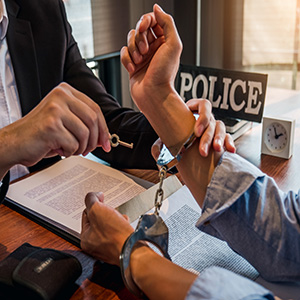 Domestic disputes involving firearms are treated with a high level of urgency in Michigan by law enforcement and the courts. In this article, we break down…
In Michigan, most police agencies operate with a strong presumption when responding to domestic violence calls – whether that policy is formally written or just informally followed. That policy is simple – when a DV call is made, someone is likely going to be arrested.
Officers approach these situations with the belief that the call is legitimate and that intervention is necessary. This mindset is driven largely by the reality that domestic situations carry a heightened risk of harm. Statistically and practically, individuals are more likely to be injured or killed by someone they know (particularly a domestic partner) than by a stranger.
Even if the person who called 911 later minimizes the situation or says everything is fine, officers are trained to view that response with caution. It may reflect fear, pressure, or a cycle of ongoing abuse rather than a true resolution.
As a result, police take perceived threats during domestic disturbance calls extremely seriously, often more seriously than other types of calls. Their priority is ensuring immediate safety, both for the individuals involved and for themselves. From a practical standpoint, officers are also motivated to prevent worst-case outcomes, such as returning to a scene where violence has escalated after they left.
Firearm possession, by itself, may not automatically result in an arrest during a domestic dispute, but in reality, it significantly increases the likelihood of being detained.
Domestic violence is already a highly sensitive legal area when firearms are involved. Under Michigan law, a domestic violence conviction, even for a misdemeanor, can prohibit firearm possession during the pendency of the case, and in the future.
First, it is basically a universally imposed condition of bond that you may not own or possess a firearm when posting bail in a domestic violence charge. In addition, recent changes in Michigan law has codified an extended prohibition period, and federal law may impose a lifetime ban under 18 U.S.C. § 922(g)(9) for qualifying domestic violence convictions.
In addition, Personal Protection Orders (PPOs) frequently include restrictions on firearm ownership or possession. While not technically automatic, these restrictions are commonly imposed. A PPO can also affect your ability to obtain or maintain a concealed pistol license (CPL).
Beyond legal prohibitions, firearm possession dramatically changes how law enforcement evaluates the situation in real time. A domestic disturbance is already treated as a serious threat. When a firearm is present, that threat level increases substantially. This can lead to:
For example, allegations involving a firearm may result in charges like felonious assault, along with a separate felony firearm charge for possessing a weapon during the commission of a felony.
So while possession alone may not guarantee arrest, it is a major aggravating factor that can quickly change both the legal exposure and how the situation is handled by police.

Mark A. Satawa Esq, founder of Satawa Law, PLLC, is a highly experienced Michigan criminal defense attorney who regularly represents clients facing domestic violence charges involving firearms. He understands the serious legal consequences these cases carry, including firearm restrictions, felony charges, and long-term impacts on your rights. Mark Satawa has helped numerous clients protect their freedom and preserve their ability to lawfully possess firearms.
If you’ve been arrested during a domestic dispute involving a firearm, don’t wait. Contact Satawa Law, PLLC today to protect your rights and your future.
Yes, and in most cases, they will. If you are arrested during a domestic dispute and have a firearm in your possession, law enforcement will typically confiscate it. Following an arrest and arraignment, it is almost certain that a condition of bond will prohibit you from owning or possessing firearms.
If there are firearms in your home, they must be removed. If they are not, you may not be permitted to return to the residence. Courts, prosecutors, and law enforcement take these restrictions very seriously, and access to firearms during an active domestic case is rarely tolerated. Violating this prohibition on firearms can, and likely will, result in your rearrest and a charge for violating the conditions of your bond.
Firearm-related evidence can be challenged, but the approach depends heavily on how that evidence is being used in a particular case. One of the most effective strategies is working with a qualified firearms expert. These experts can assist in evaluating and challenging key aspects of the evidence, including:
In some cases, firearm experts are also critical in evaluating claims of self-defense. They may analyze whether the use of force was consistent with legal standards, including whether a duty to retreat applied and whether the response was reasonable.
An arrest involving a firearm during a domestic dispute creates multiple legal issues that must be addressed quickly. These may include:
The most important first step is to contact and retain an experienced attorney. Early legal involvement is critical to protecting your rights and addressing the potential consequences, especially those related to firearm ownership.
You should also be prepared for the likelihood that your bond will prohibit firearm possession. If that occurs, you must arrange for lawful storage of your firearms outside of your custody and control. This must be a legitimate transfer. Simply keeping the firearms nearby or accessible can violate bond conditions and result in additional charges.
Violations of firearm-related bond conditions are taken very seriously and can significantly impact the outcome of your case.
For more information on firearm domestic disputes in Michigan, an initial consultation is your next best step. Get the information and legal answers you are seeking by calling (248) 419-6133 today.
Mark A. Satawa Esq, founder of Satawa Law, PLLC, is a highly experienced Michigan criminal defense attorney who regularly represents clients facing domestic violence charges involving firearms. He understands the serious legal consequences these cases carry, including firearm restrictions, felony charges, and long-term impacts on your rights. Mark Satawa has helped numerous clients protect their freedom and preserve their ability to lawfully possess firearms.
If you’ve been arrested during a domestic dispute involving a firearm, don’t wait. Contact Satawa Law, PLLC today to protect your rights and your future.